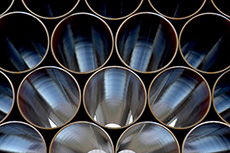
API announces 47th edition of foundational Line Pipe standard
This was API’s very first standard and it is still relevant for the industry after dozens of evolutions.
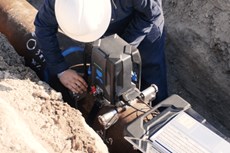
XCEL adopts next-generation technology for in-situ material verification.
Expected to generate over US$125 million in savings.
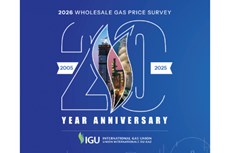
The Survey concludes that global natural gas markets are entering a new era defined by increased market-based pricing, expanding LNG flexibility and intensified geopolitical risk, as the world experiences its second major natural gas price shock in just four years.
The updates incorporate by reference revised editions of NACE SP0206 and NACE SP0502 into 49 C.F.R. Parts 192 and 195, further aligning regulatory requirements with current industry practices for managing internal and external corrosion in pipeline systems.
Reuters reports that Trump signed memorandums on coal supply chains, domestic petroleum production, natural gas transmission and liquefied natural gas capacity.
Amy Mitchell, an attorney at Spencer Fane, writes about a landmark Fifth Circuit case examining FERC’s regulatory approach to pipeline expansion, focusing on cost allocation, environmental review, and agency discretion.
Developed through the H2Pipe Joint Industry Project, the ‘DNV-RP-F123 Hydrogen Pipeline Systems’ Recommended Practice addresses hydrogen-specific risks in offshore pipeline design and operation to support safe deployment.
PHMSA grant programme provides funding to repair or replace leak-prone pipeline infrastructure.
Moves will generate over US$600 million in savings while enhancing safety.
US$9.6 million Proposed Civil Penalty is the largest ever proposed by PHMSA in a pipeline safety enforcement action.
Oil and gas companies in the UK, Canada and Australia are failing to fully disclose the costs of decommissioning their fossil-fuel-related infrastructure, leaving investors with incomplete and non-comparable information.
These new priorities support the Department’s core mission of upholding the highest of safety standards.
The announcement was made at the United Nations Climate Change Conference (COP30) in Belém, Brazil.
The EPA has formally recognised a drone-based inspection method, which means remote methane inspections now count for compliance.